

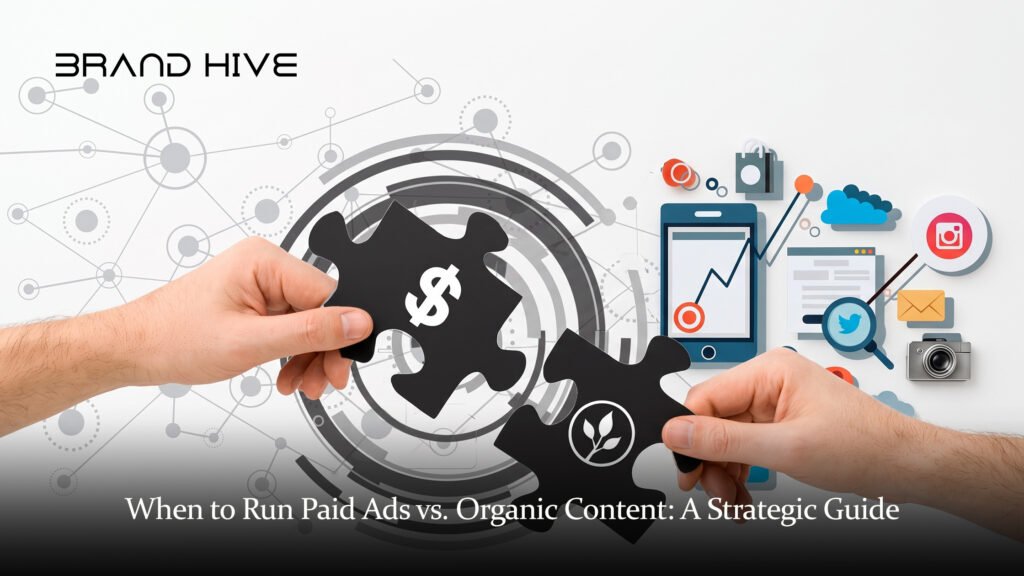
One question comes up again and again: “Should I focus on paid ads or organic content first?” The honest answer is that it depends, but there are clear principles that help you decide . Most business owners approach this as a binary decision—choosing one over the other. But that framing misses the bigger picture .
Understanding the Core Difference
Paid ads and organic content serve fundamentally different roles. Paid ads capture demand; organic content creates and nurtures demand . When you understand that distinction, the strategy becomes much clearer.
Paid advertising gives you speed. You can have leads coming in within hours of launching a campaign . Platforms like Google Ads and Meta allow you to show up at the exact moment someone is searching for what you offer . The trade-off? It is rented traffic. Turn off the spend, and the traffic stops immediately .
Organic content—blogs, SEO, and social media—is owned traffic. You invest time and effort upfront, and the results compound over months. A blog post written today can still drive leads five years from now . The challenge is that it takes time. Most content takes months to gain traction .
When to Run Paid Ads First
Paid ads make the most sense when you need immediate results and have a proven offer. .
Consider paid ads when:
- You need revenue fast. Startups and new businesses can’t always wait 6–12 months for SEO to kick in .
- Your offer is already proven. You know your product converts; you just need volume .
- You want to test a market quickly. Ads let you test messaging and audience targeting without waiting months for organic data .
- Your margins can absorb the cost. If customer lifetime value is high enough, paid ads become a scalable investment .
Where paid ads fall short is sustainability. Costs rise as competition increases, and performance depends heavily on your conversion system . If your landing page or offer isn’t optimized, ads will fail loudly and expensively .
When to Prioritize Organic Content
Organic content is the better primary investment when you have a long-term horizon and limited budget .
Choose organic-first when:
- You have limited ad budget. Poorly funded ad campaigns rarely work; organic has a better floor .
- You are in a trust-driven industry. Sectors like legal, healthcare, or finance rely on extensive customer research before buying .
- You want to build brand credibility. Organic results carry more trust with consumers than paid ads . Studies show users are more likely to click on organic results for research-heavy purchases .
- Your competitors haven’t invested in SEO yet. There is a real first-mover advantage .
Organic content often feels slow when its role is not clearly defined . It stops working when every post says something different, messaging changes week to week, or content exists just to stay “active” . Posting consistently doesn’t build trust by itself—being understood does .
The Truth: The Best Strategy Uses Both
The businesses that grow fastest aren’t choosing one or the other. They are using them together, at the right time, in the right ratio . Organic and paid are not competing for your resources; they are doing completely different jobs in the customer’s journey . Organic helps people understand you. Paid helps more of the right people see that message .
A Practical Framework
Phase 1 (Months 1–3): Start generating leads immediately while laying the organic foundation—website SEO, Google Business Profile, and initial blog posts targeting high-intent keywords . This gets you revenue while building the long-term asset.
Phase 2 (Months 4–6): Once you have data on what messaging converts, run small, targeted ad campaigns to amplify it. Start with retargeting, which is typically cheapest and highest converting .
Phase 3 (Months 7–12): Double down on the channels producing the best customer acquisition cost. By this point, organic should be contributing meaningful traffic, and you know exactly which ad creative and audiences work .
Avoiding the Biggest Mistakes
Many businesses assume running ads is enough on its own, or that SEO is too slow to be worth the effort. Both assumptions are costly .
- Stopping ads without building organic rankings leaves you invisible overnight .
- Starting SEO without a keyword strategy wastes time .
- Running paid ads without a well-optimized landing page drains budget without converting visitors .
- Treating both channels as separate silos misses the compounding advantage of an integrated approach .
Final Thoughts
The decision between paid ads and organic content isn’t about choosing the “right” channel—it’s about sequencing them strategically. Paid ads give you speed and immediate visibility; organic content builds trust and sustainability. The most effective approach is to use both, starting with paid ads to generate early traction while investing in organic content for long-term growth.
At BrandHive, we understand the power of a balanced approach. With over two decades of experience in branding and marketing within the health, wellness, and natural products industry, we help businesses build comprehensive strategies that combine immediate visibility with lasting brand equity . Whether you need to generate leads now or build a foundation for sustainable growth, our expertise ensures your marketing efforts work together—not against each other. Let’s build a strategy that delivers results today and compounds for years to come.